
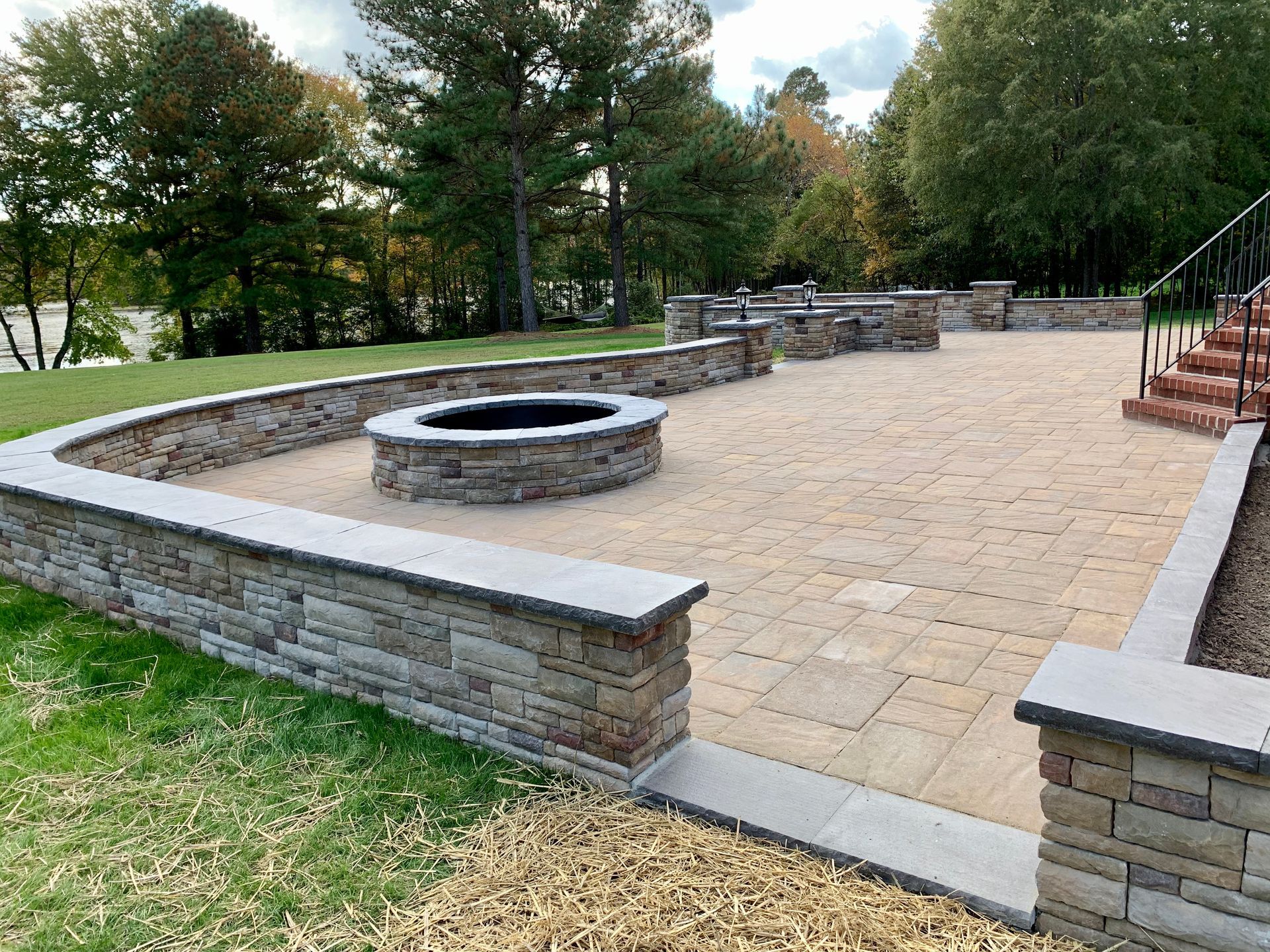
Outdoor Spaces Built to Last
Patios in Short Pump for homeowners replacing cracked concrete or adding usable outdoor living areas
Stone River Landscapes, LLC builds paver and natural stone patios throughout Short Pump and the surrounding areas for homeowners who need durable outdoor spaces that won't crack and settle like poured concrete. You're looking at a surface that handles freeze-thaw cycles, drainage issues, and ground movement without the structural failures common to monolithic slabs. This work matters when you want a backyard gathering area that remains level and intact year after year.
Concrete pavers and natural stone offer flexibility that poured concrete cannot match. When the ground shifts or a utility line needs access, individual pavers lift out and replace without demolishing the entire surface. You select from colors, textures, and laying patterns that suit your home's architecture. The joints between pavers allow water to drain through rather than pooling on the surface, and if one section settles, it's adjusted without tearing out adjacent areas.
Reach out to discuss your lot conditions and the patio layout that fits your use and budget.
How Paver and Stone Patios Go In
Your patio starts with excavation to the depth required for base material, which typically runs six to eight inches depending on soil type and expected load. The crew removes topsoil, grades for drainage away from the house, and compacts crushed stone in lifts using a plate compactor. A layer of bedding sand goes down next, screeded level to ensure the pavers sit uniformly. Edge restraints lock the perimeter in place before the field pavers are laid in the pattern you selected.
After installation, you'll see clean lines, uniform joints, and a surface that sheds water without standing puddles. The pavers interlock under compaction, and polymeric sand swept into the joints hardens to resist washout and weed growth. Stone River Landscapes, LLC ensures the base is stable and the slope directs runoff where it belongs, so the patio doesn't heave in winter or sink in clay soils common to the region.
Natural stone patios require similar base preparation but involve fitting irregular pieces and filling joints with smaller stone or mortar depending on the look you want. Thickness varies by stone type, and the surface remains uneven by design, offering texture and a less formal appearance than pavers. Both methods avoid the cracking that occurs when concrete slabs cure unevenly or settle on poorly compacted fill.
Homeowners in Short Pump often ask how paver patios differ from other options and what to expect during construction.

Questions About Patio Installation
What makes pavers more repairable than poured concrete?
You lift and reset individual pavers without cutting or removing surrounding material, so repairs remain invisible and the rest of the surface stays intact.
How deep does the base need to be?
Base depth depends on your soil bearing capacity and whether the patio will support furniture only or heavier features like outdoor kitchens, but six to eight inches of compacted aggregate is typical for residential use.
When should natural stone be used instead of pavers?
Natural stone works well when you want irregular shapes, earthy color variation, and a textured surface that complements wooded or informal settings.
How long does installation take?
Most residential patios require three to five days from excavation through final compaction, accounting for base curing time and weather delays common in Short Pump's humid climate.
Why does polymeric sand matter?
Polymeric sand hardens after activation with water, locking pavers together and preventing joint material from washing out during heavy rain or when you hose down the surface.
Stone River Landscapes, LLC works with homeowners who want outdoor spaces that handle the local soil and weather without the maintenance burden of cracked concrete. Contact the team to review your site and go over material options that fit your intended use and aesthetic goals.