
Grade Changes That Hold
Retaining Walls in Short Pump for properties with slopes, erosion, or unusable yard sections
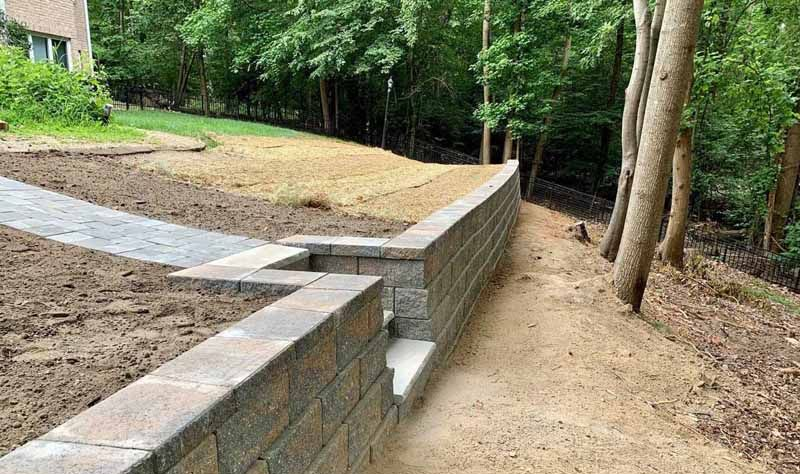
Stone River Landscapes, LLC installs natural stone and segmental retaining walls in Short Pump and nearby areas for homeowners managing slope failures, drainage problems, or yards that can't be used because of grade changes. You're addressing soil movement that undermines driveways, washes out plantings, or leaves sections of your lot inaccessible. These walls hold back earth, redirect water, and create level terraces where the ground previously slid or eroded.
Segmental block walls use manufactured units with interlocking lips and hollow cores that accept drainage aggregate and geogrid reinforcement when height or load requires it. Natural stone walls rely on the weight and friction of irregular stones stacked and fitted to form a stable mass. Both types need proper drainage behind the wall face to prevent hydrostatic pressure from pushing the structure forward, which is a common failure mode when backfill stays saturated.
Call to schedule a site visit and discuss the wall type that suits your soil conditions and the height you need.
Wall Construction and Drainage Integration
Your retaining wall starts with a below-grade base trench filled with compacted crushed stone to support the first course. The wall rises in courses, each set back slightly to create batter, which angles the face into the retained soil for stability. Drainage aggregate fills the cavity behind the wall, and perforated pipe at the base collects water and routes it to daylight or a drainage system. Without this pipe, water saturates the backfill and destabilizes the wall during freeze-thaw cycles.
Once complete, you'll see a level terrace above the wall, a vertical or near-vertical face, and no standing water at the base. The wall holds the soil plane without bowing or tilting, and plantings or turf establish on the retained slope without washing downhill. Stone River Landscapes, LLC sizes the base width and selects reinforcement based on wall height and surcharge loads such as driveways or structures near the top of the slope.
Natural stone walls take longer to build because each stone is individually placed and shimmed for stability, while segmental block walls proceed faster due to uniform units and mechanical interlocks. Both methods require careful attention to drainage and compaction behind the wall, which determine long-term performance more than the facing material itself.
Property owners in Short Pump often need clarification on drainage, materials, and when professional installation is necessary.

Common Retaining Wall Questions
What causes retaining walls to fail?
Walls fail when water pressure builds behind them, the base settles unevenly, or the backfill isn't compacted, all of which create lateral forces the wall can't resist.
How tall can a segmental block wall be built without reinforcement?
Most segmental systems handle three to four feet without geogrid, but taller walls or those supporting driveways require reinforcement layers tied into the backfill.
When is natural stone the better choice?
Natural stone suits properties where aesthetic integration with existing rock outcrops or wooded surroundings matters more than construction speed.
How does drainage pipe prevent wall movement?
Perforated pipe at the wall base collects groundwater before it saturates the backfill, reducing hydrostatic pressure that pushes the wall forward, which is critical in Short Pump's clay soils that drain slowly.
Why does the wall need to lean back?
Batter angles the wall face into the retained soil, using gravity to counteract lateral earth pressure and improve stability as height increases.
Stone River Landscapes, LLC handles retaining wall projects where drainage, soil type, and load conditions require more than a basic stacked-stone border. Get in touch to review your slope and determine the wall design that prevents future erosion and creates usable yard space.